Placeholder
Not At Swim At the Moment, Easter, 2026

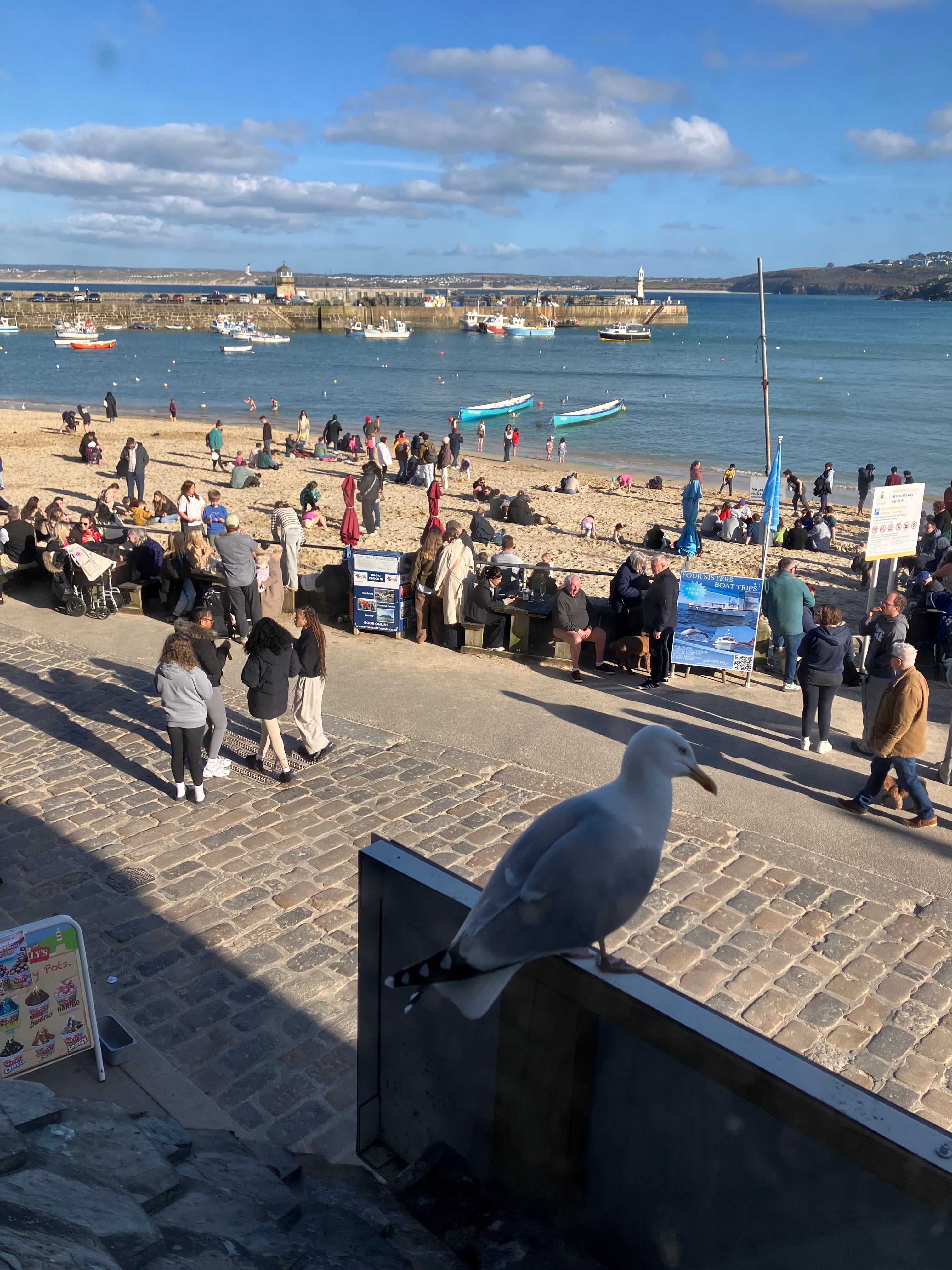
Hello! This is an article I wrote for Writing magazine that I thought you might like, though if you read this space regularly you’ll recognize some turns of phrase. If you have been looking for posts, I apologize. I miss writing here. I will post again in about two weeks, and I’ve been trying to figure out what to do with this space—and the rest of my life—after that.
******
A little more than five years ago, I took up early morning swimming. I lived in Austin, which is in the center of Texas. In the center of Austin, there is a large park; in the center of the large park is a large spring-fed swimming pool. At the center and bottom of the swimming pool are two species of endangered salamanders, the Barton Springs Salamander (named after the pool, which is named after the springs) and the Blind Salamander. I have never seen these salamanders, which are at the pool’s very depths, but I have read the signs telling me and other swimmers not to harm them.
I took up swimming—usually before daylight—for the same reason everyone took things up in 2020: I had a lot of time on my hands. I don’t bake, I don’t knit, and I was already working on a novel. Two, in fact. Every morning I got up and swam, and then I went to work.
This is how I think about swimming. Some years ago I did an event with a friend, a brilliant writer whose work and opinion I respected. When a young writer asked for advice, she said that she believed that beginning writers should learn how to describe things straightforwardly before delving into metaphor and simile. Say what something is, said my friend, before saying what it’s like. It sounded like good advice. I have spent the past 35 years disagreeing with it in my head.
For instance, I cannot tell you what writing is, what my writing process is, what thought processes are. But I can tell you about swimming for an hour in the 5AM cold, before sunrise.
Starting is a shock. The water is cold. (It’s about 68 degrees Fahrenheit year round.) Soon I’m impressed with my own bravery: not everyone can do this. On clear mornings, I can see almost nothing but my own arms—that is, my own effort—ahead of me. I am the only person in the pool, or else the other people are far away and cloaked in dark. As I swim I become aware of more: bubbles rising from animal life at the pool’s bottom. I swim into loose vegetation—a branch, some leaves—at first a surprise, and then a beautiful joke: I’m wearing a green mustache and beard and a crown of frondescence. I am not myself.
Half an hour in I start to see things in the depths: turtles, fish, sometimes, thrillingly, diving cormorants. I understand the shape of the underwater world around me; I don’t even realize it’s because the sun is coming up the way it always has, every single day. I believe it’s my own powers of perception. Some wonderful mornings one of my fellow swimmers will suddenly appear far below me, swimming twelve feet down, as though born on the rocky bottom. Above the water, there are ducks and geese and herons (both white and night-crested) and eventually I realize that no matter how alone I thought I was in the dark, I have company. Start in darkness, leave in light. This is pretty close to how I write novels. I know nothing at first. Then a few bits of life make themselves known. I have to keep going—writing, swimming—or I’ll be sunk, but the whole thing is I want to. I can’t seen anything unless I keep moving forward.
At the bottom are the mysterious beings that must be respected and unexamined, salamanders or inspiration. I know they’re there though I have never seen them.
I often hallucinate at the pool, peering at things through my half-fogged goggles and my own inattention—inattention because I’m always writing in my head when I swim. “You must find it meditative,” somebody said to me recently. No. My head is full of thoughts, worries, and writing when I swim. Luckily the lines of fiction are buoyant and the worries are largely water-soluble. I mistake the cormorants for snorkelers and vice-versa. I was once certain I saw a bear swimming. (It was a bearded man in a hat.) Some branches look like sinking boats; I often think people are buck naked when their swimwear is the color of their skin; there are plastic ducks marking off the salamander habitat who I always believe to be real.
The other say I saw a moving shape by the side of the pool, and I couldn’t tell from a distance whether it was bird or human life. As I got closer and moved past, I realized it was a collage of somebody’s dropped white towel and an orange traffic cone that marked off a crack in the concrete. It looked like it was moving only because I was.
What I mean is I’m not sure I have ever described anything in a straightforward way because my allusive brain is always mistaking things for what they are not. This has always looked like that to me. When my friend the writer said that metaphor was an advanced technique, she meant for her it was. For me metaphor is where I start. If I practice long enough—if I keep swimming—one of these days a character in my work will wear a simple beige raincoat with brown buttons, and those buttons won’t look like anything else.
Still, swimming will always feel like writing to me. I do it by rote and often as I can, because it’s so hard to start up again after a long break, but once I’m in it, nothing is by rote, everything is different, I can pilot my body through the world but I’m not in charge of what happens, not with the cormorants or the salamanders or my characters.
That first fall, when I was swimming and writing two novels and doing very little else, I finished both books. Each was around 40,000 words. One I published in 2022; the other I have put aside, trying to decide whether it should be much longer or much shorter. I have swum while writing two more books. I haven’t finished swimming, though it’s imminent: I am moving from Austin for good at the end of the academic year. Where will you swim? people ask me, and I say, Probably nowhere. It would be like asking me what I plan to type if I can’t write fiction. The action is not the point; everything else is. I am moving somewhere beautiful, though, with hills and vistas and glorious walks. Soon, I imagine, that will seem like writing to me, too.
Wherever you go, I hope you find something that you enjoy as much as swimming. I started mountain biking in my pandemic digs, and I like to think I'd keep it up when I move, but every chapter doesn't need to be the same.
I’m halfway through A Long Game - reading it a little bit at a time as a means to absorb something that will stick. What I like best so far is permission, to be ourselves as writers. Sometimes it IS okay to tell!